Riveting ‘Silent Friend’ captures nature’s eroticism
Given all the sexual heat and imagery on display in Ildikó Enyedi’s sumptuous “Silent Friend,” you’d expect it to garner an NC-17 rating if it weren’t about, er, plants. Yes, plants! Replete with full-floral nudity and testees subjected to the kind of erotic experiments that might make Masters and Johnson blush.
The star is a centuries-old gingko on the campus of the University of Marburg in Germany. Stately, expansive and a certified scene-stealer, we bear witness to its sociological effects on academics from three vastly different time periods. Two of the scholars are botany students, and one is a visiting neuroscientist from Hong Kong, more interested in measuring the brain functions of infants than in photosynthesis.
The three seemingly have nothing in common other than a connection to Marburg and a shared fascination with the captivating gingko. But as this deep dive into the love lives of flora and fauna progresses, you begin to discern a shared loneliness, as well as a struggle to communicate with their peers. That is, until they surrender to the power of nature’s interconnectedness.
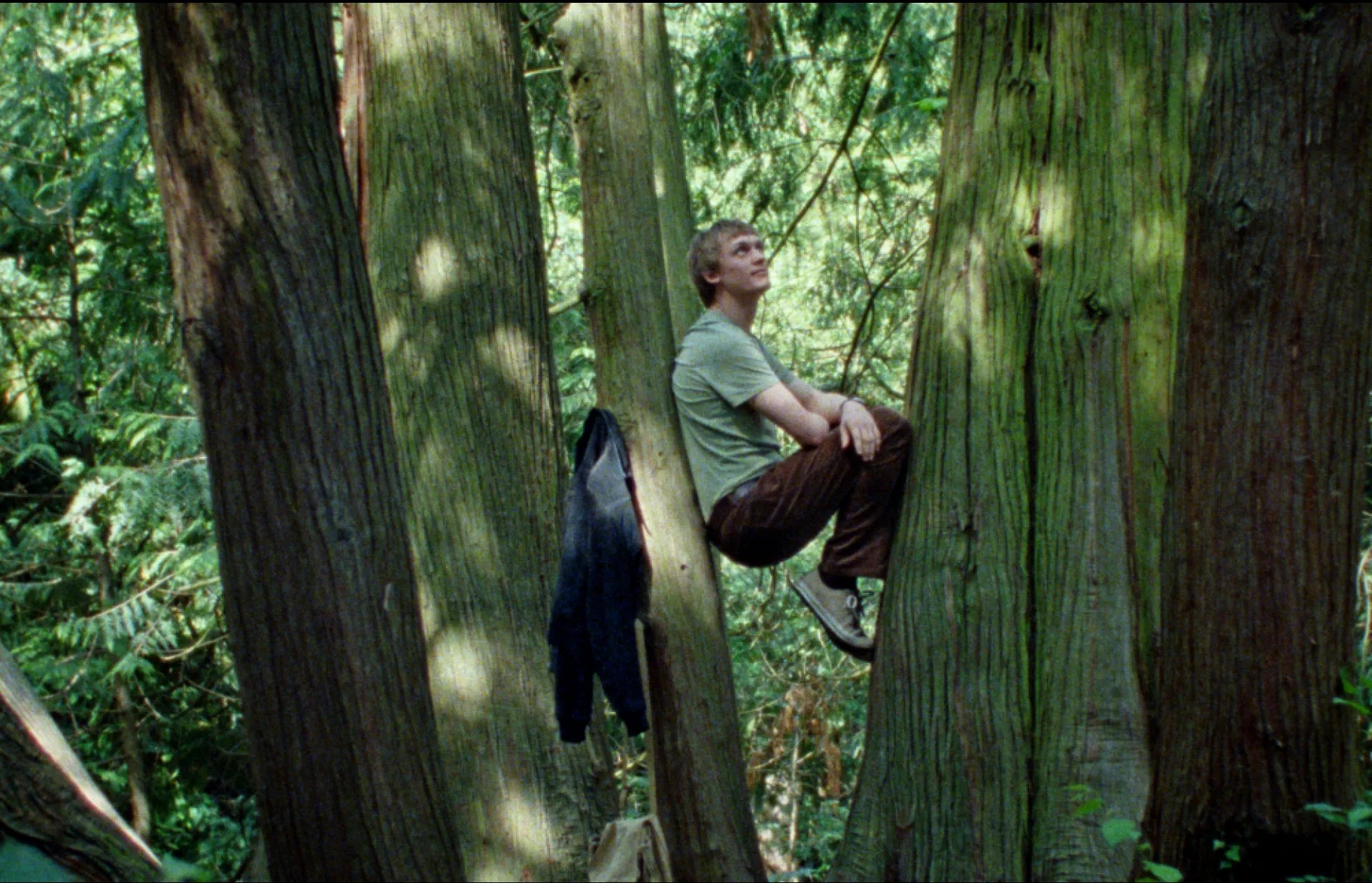
Sounds dull, I know. And with a generous runtime of 145 minutes, “Silent Friend” might appear daunting. And for a brief time, it is, as Enyedi slowly and stealthily lures you in until you’re fully in step with her oddball beat. Much of that appeal is due to the gorgeous footage DP Karoly Szalai captures using three distinct film techniques, each reflecting the eras in which our three protagonists exist.
For me, the most intriguing presence is Grete (Luna Wedler, named the best young actress at the 2025 Venice Film Festival), revealing herself to be a true pioneer as the university’s first female student. The time is the dawn of the last century, an age of misogyny and rampant sexism, as demonstrated by her patriarchal classmates and instructors. It’s an environment perfectly suited to the 16mm monochrome Enyedi employs in accentuating the bleak prospects of a woman seeking to succeed in an environment where she’s widely viewed as little more than a sex object, or worse, an annoyance.
A different form of discrimination awaits virginal farm boy Hannes (Enzo Brumm), as the palette shifts to a slightly more colorful, albeit grainy, 16mm stock to showcase his flirtatious encounter with a far more worldly coed. She’s Gundula (Marlene Buro), a sexy 1970s-era feminist who, unlike her more radical friends, is instantly drawn to both Hannes’ innocence and honesty. And if he plays his cards right, she just might invite him into her flower bed, perhaps even introduce him to her pet geranium.
Prejudice also plays a part in the story of Tony Wong (Tony Leung Chiu-wai), a brilliant Asian researcher who sparks suspicion in the mind of the campus caretaker, Anton (Sylvester Groth), when, amid COVID, they find themselves the only remainees at Marburg. Their weird mating dance, recorded on high-definition digital, is rendered as bright and sunny as the stunning view Tony enjoys from his quarters overlooking the giant gingko.
It’s disarmingly moving to witness Grete, Hannes, and Tony walking the same ground in different eras, as each develops a newfound affection for the lush vegetation. For Grete, it’s expressed through nature photography, in which she draws parallels between the reproductive organs of plants and humans, a la Georgia O’Keeffe. For Hannes, it’s about using sensors and computer technology to evaluate a plant’s “emotional” reactions to human and environmental stimuli. It’s an exploration that Tony elevates by refocusing from the psychological examinations of babies to that massive gingko, wrapping it in electrodes to advance his hypothesis that plants possess a consciousness and a language not unlike our own.
What I appreciate most about Tony’s tale is how brilliantly he makes the most of a terrible situation that prevents his return home during the pandemic. Instead of feeling sorry for himself, he takes advantage of the unexpected spare time to venture beyond his normal field of study. And in the process, he forges unexpected friendships with both Anton and Alice (Léa Seydoux), the celebrated botanist he frequently collaborates with via Zoom.
Unfortunately, Tony’s is the only one of these interwoven stories to offer a satisfactory conclusion. And it’s more than a little frustrating that Enyedi neglects to share the fates of Hannes and Grete. It diminishes her film’s overall impact, but it does nothing to reduce the abundance of creativity exhibited, from the liberal use of time-lapse depictions of plants having their version of sex to the colorful EEK readouts on Tony’s computer screen.
Most notably, Enyedi engenders in us a greater respect for the plant kingdom and a wild new curiosity about its potential to communicate love and eroticism. As Alice imparts, they are outside our windows watching every move, naked and unafraid. If that’s not enough inducement to pull your shades at night, I don’t know what is. What’s next? Playtree magazine? Plankhouse? The possibilities are endless. And if after seeing “Silent Friend” you get the sudden urge to embrace the next tree you come across, go ahead and unabashedly give its soft, tender buds a squeeze. It may bark, but it won’t bite.
Movie review
Silent Friend
Rated: Not rated
Cast: Tony Leung Chiu-wai, Luna Wedler, Enzo Brumm, Sylvester Groth, Léa Seydoux and Marlene Burow
Director: Ildikó Enyedi
Writer: Ildikó Enyedi
Runtime: 145 minutes
Where: In theaters May 8 (limited)
Grade: B+