Gibney’s ‘Musk’ will shake you to the core
Politicians often complain about immigrants destroying our country, and for the most part, they err. Yet, there is an exception when it comes to two elitist transplants: Australia’s Rupert Murdoch, owner-founder of the GOP’s fabulistic propaganda machine, Fox News; and South Africa’s Elon Musk, the wannabe Bond villain who is currently dumping hundreds of millions into the coffers of Republican candidates in a concerted effort to stave off government investigations into his vast empire, including X, SpaceX, Tesla and Starlink.
As powerful, heavily monied allies of President Donald Trump, both émigrés enjoy all the clout billions can buy. On the whole, they run their conglomerates with carte blanche. But while Murdoch (as personified by Mr. Burns on the Fox-produced “The Simpsons”) has somewhat embraced his ruthless image, it’s easy to recall a time when Musk was deemed a bona fide hero, vigorously advocating for free speech, the environment, and technological breakthroughs. Many considered him the Edison of his era. No more.
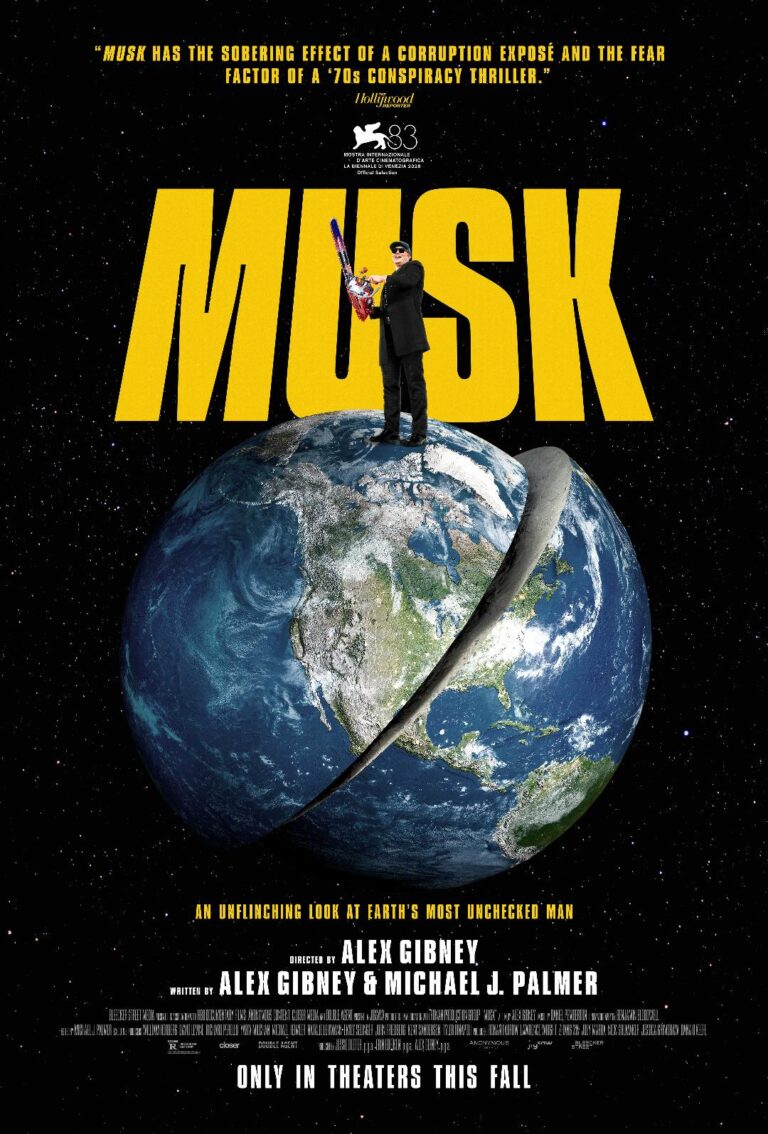
Pinpointing when and why that changed is the mission of Oscar-winning documentarian Alex Gibney (“Taxi to the Dark Side”), who utilizes his exhaustive, nearly four-hour opus, “Musk,” to pull back the curtain and expose an “evil genius” who is a bit of a real-life Oscar Diggs, the “not-so-wonderful wizard” of Oz, who was revealed to be nothing more than a conman selling the illusion of a powerful magician.
Like a deft prosecutor, Gibney constructs a compelling, highly damning case against his subject, contending that Musk repeatedly failed upward through a combination of impeccable timing and stolen valor, beginning with the Internet startup Zip2 (an Internet Yellow Pages) in 1998 and continuing through to his contentious reign in 2025 as the Trump-appointed head of the newly created Department of Government Efficiency (DOGE). Over that 27-year span, Musk took the small fortune his father, Errol, bequeathed him in the 1990s and leveraged it to become the nation’s first trillionaire. Gibney methodically unveils the many dead bodies Musk was willing to step over en route (from betrayed business partners and abandoned baby mamas) while at the same time presenting a primer on how he frequently gamed the system to his advantage.
Musk has called the movie bearing his name “a hit piece,” and in many ways it is. But what did he expect after refusing to respond to the negative assertions voiced by an array of burned business partners and jilted companions? Most notably, his first wife, Justine Wilson, and ex-girlfriend, conservative influencer Ashley St. Clair, who drops the bombshell allegation that the sire of her child (one of at least 14 Musk has fathered) used Starlink to rig the 2024 election for Trump. Both women agree Musk was distant and unknowable, with an occasionally tearful Justine recalling the pain of witnessing her ex transition from a lovable wonk into a borderline sociopath.
We also hear from Tesla co-founder Martin Eberhard, who claims Musk was brought on as an investor and consultant before staging a coup that left Eberhard on the outside looking in at the evolution of an invention Musk now freely takes credit for. Their falling out was typical for Musk, who, tech journalist Kara Swisher says, “gets into beefs, and gets kicked out or kicks someone else out.”
Indeed, a distinct pattern emerges over a fast-paced 235 minutes (including a 10-minute intermission), as we’re shown numerous examples of Musk continually wearing out his welcome, including with Trump, whom he accused of being prominently featured in the Epstein files. They’ve since made up, likely because, as Gibney suggests, the bond between these two peas in a pod is both symbiotic and transactional: one seeks access, and the other seeks enough cash ($300 million) to get re-elected.
To back up his myriad accusations, Gibney brings the receipts, using colorful, eye-catching graphics, archival clips, and, most controversially, a smug-looking AI-generated Musk delivering pre-programmed comments culled from audio interviews and speeches Musk has given over the years. It’s almost as cheesy as the director’s bizarre use of animation to depict Musk literally decapitating workers at the various federal agencies DOGE gutted last year. We’re told most of these entities – EPA, Consumer Protection, the IRS – were preparing to file charges against Musk before he and his team, including the infamous Big Balls, struck.
What’s missing is any insight into how Musk devolved into the obsessive, power-hungry control freak he is today. For instance, what role did his abusive, highly critical dad play in his Trump-like need to prove himself? And what about Musk’s well-documented Asperger’s syndrome, a disorder he and I share and one that often unfairly provokes accusations of aloofness and a lack of empathy? Charges often leveled at Musk. I’m guessing that aspect didn’t fit Gibney’s agenda.
Yes, “Musk” is often heavy-handed. And for a comprehensive movie, it’s surprisingly incomplete. It does, however, accomplish its purpose: to scare the bejesus out of voters before they head to the polls next month. With that goal in mind, Gibney fittingly paints Musk as an amalgamation of every megalomaniac Bond villain who ever sought to mold the world in his image. Dangerous? You bet!
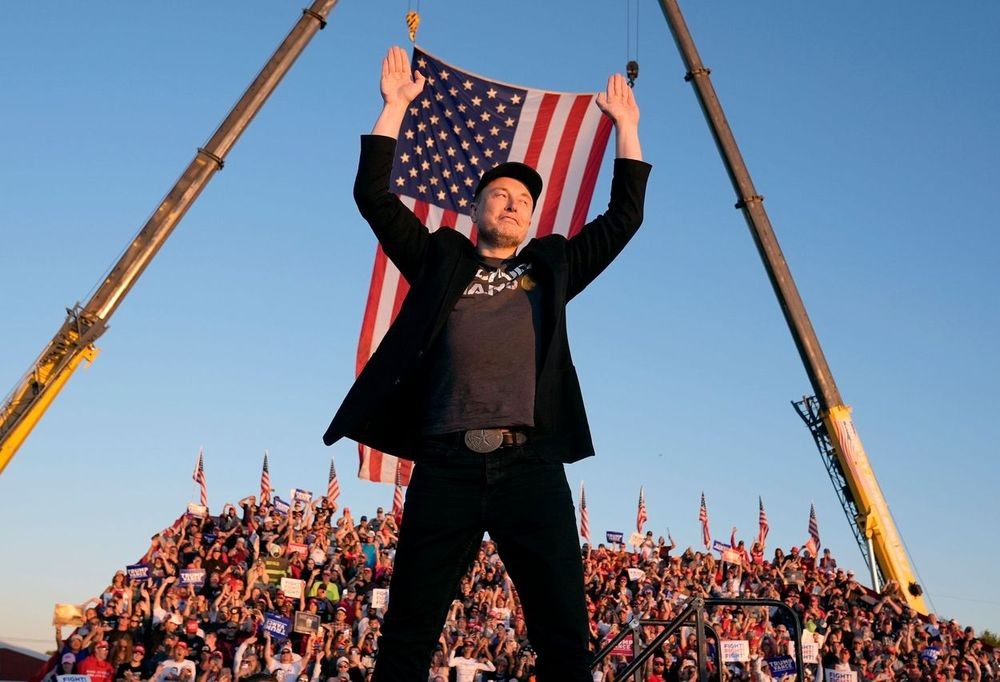
But how did Musk amass that much power, and why is he allowed to wield it without restraint? Gibney traces much of that to Musk’s meticulously crafted public persona: the nerdy, self-taught engineer who dresses in jeans and T-shirts while secretly plotting to dominate not just the U.S., but the entire world. And he’s come uncomfortably close to that objective, with help from both the Trump and Obama administrations, which have awarded him billions in government-sponsored contracts, primarily for SpaceX and Starlink. Not to mention a ton of advantageous publicity, apart from the occasional Nazi-like salute.
Would you expect anything less from a man who fancies himself the real-life Ironman, the one superhero who can save the world from itself? But his benevolence falls far short of Tony Stark, who would be unlikely to cook up an elaborate scheme to bilk hundreds of millions from California’s Zero-Emission-Vehicle program. Nor would Stark undertake anything as heinous as issuing massive checks for executed NDAs from both the mothers of his kids and the dozens of families who’ve lost loved ones due to Tesla’s fallible “self-driving” Autopilot feature. At least they got something. Not so for the thousands of African children who have died and are likely to die in the wake of DOGE’s cruel dismantling of USAID.
It’s a gut punch to the millions like me who once admired Musk. But somewhere along the line, he got lost. Gibney surmises the catalyst to be the coinciding events of learning that his daughter, Vivian, had transitioned and the advent of COVID-19, which sparked costly shutdowns of his Tesla and SpaceX factories in California. He’s since relocated them to Texas.
Toss in Musk’s illogical fantasies about colonizing Mars and you have the makings of an information overload. It’s all too much, yet I couldn’t help but be wowed by both the movie and Musk’s insane notion that we’re all participants in a simulated video game played by future AI lifeforms.
If that’s true, and even he admits it’s improbable, it’s sobering to contemplate how fast we are moving toward “game over.” Worse, Musk and his overblown ego may be hastening that apocalypse. So as Halloween approaches, you could say, “Who needs Jason and Freddy Krueger when we’ve got Musk?” Gibney seems to agree, as he implies that, when it comes to embodying malevolence, Musk is the undisputed king.
Movie review
Musk
Rated: Brief violent content and language
Featuring: Ashley St. Clair, Kara Swisher, Justine Wilson and Ashley St. Clair
Director: Alex Gibney
Writers: Alex Gibney and Michael J. Palmer
Runtime: 235 minutes
Where: In theaters Oct. 16
Grade: B