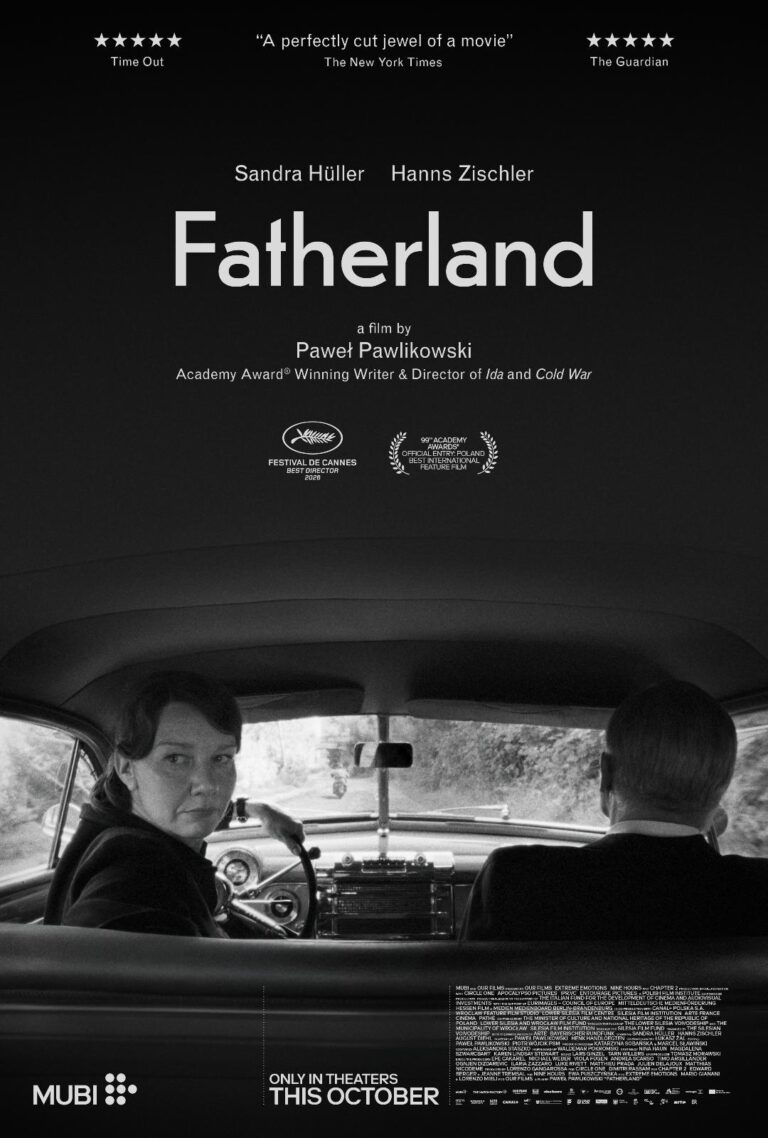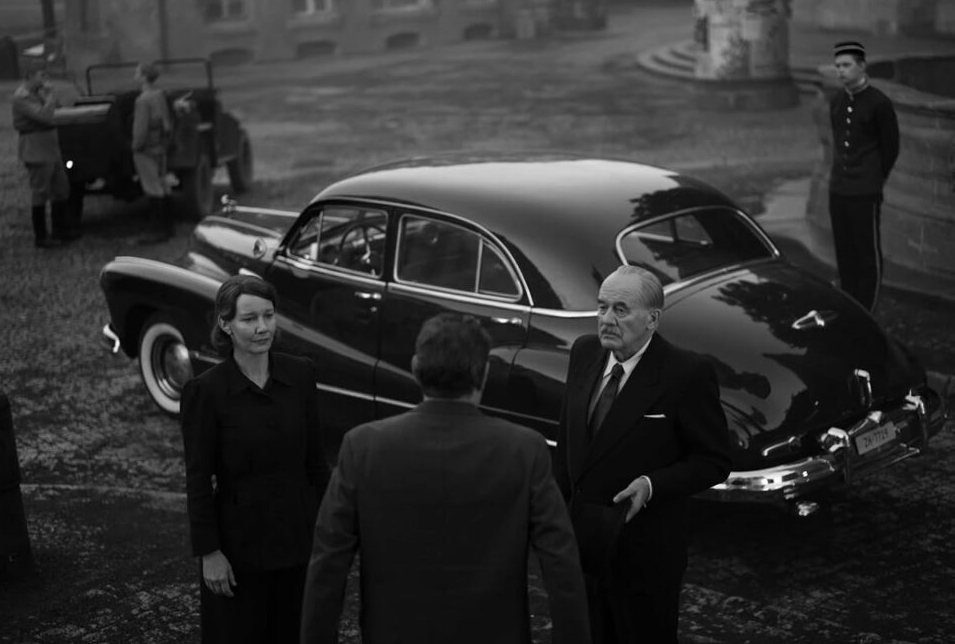
Fab Hüller is at the wheel in ‘Fatherland’
If Paweł Pawlikowski’s “Fatherland” scores an Oscar nomination for Best International Feature, as expected, it will largely be due to Łukasz Żal, arguably the finest cinematographer working today, and Sandra Hüller, incomparable at conveying strength and vulnerability in one of her best performances. Together, they breathe life into Pawlikowski’s somewhat staid historical drama about a country without sovereignty and a family without a country.
Namely, post-war Germany after the Allies and the Soviet Union divvy it up, with freedom and democracy on one side and austerity and repression on the other. Or, as one character astutely puts it: “Stalin or Mickey Mouse?” Pawlikowski presents this contrast as if he’s uncovered something revolutionary. But what makes it unique is his and his co-writer Hendrik Handloegten’s decision to use Nobel-winning writer Thomas Mann as a conduit linking East to West.
It’s 1949, and the occasion is the 200th birthday of Johann Wolfgang von Goethe, the iconic author Mann (Hanns Zischler) so famously lauds that he’s been invited back to the homeland he fled — some say “betrayed” — when Hitler rose to power. Now a naturalized citizen of California, the prodigal son’s return is tantamount to The Beatles coming to America. Crowds greet him, choirs entertain him, and lavish cocktail parties fete him. His reception in both U.S.-controlled Frankfurt, Goethe’s birthplace, and Soviet-occupied Weimar, where Goethe lived and died, is equally warm. What differs drastically is how they honor him: loosey-goosey and booze-soaked in Frankfurt and regimented and spartan in Weimar.
Accompanying him is his eldest daughter, Erika (Hüller), who serves as his de facto personal assistant and is treated as such. Warm and fuzzy, Thomas is not. Nor are his “leftist” political views, which are beginning to stir calls for his ouster from the U.S. with McCarthyism on the rise. Keeping that in mind, he’s window-shopping new nations. Same for Erika, who, unlike her dad, was denied U.S. citizenship for subscribing to even more radical views.
They are very much exiles, as is Erika’s twin, Klaus (August Diehl), who now calls Cannes home and very much wants his sister to join him there. And given how badly the ungrateful old man treats her, you kinda wonder why she doesn’t. In effect, she’s a microcosm of post-war Germany: powerless and her destiny being determined by her iconoclastic brother on one side and authoritarian father on the other.
It’s a clever narrative device, but not quite as clever as Pawlikowski believes. Nor is it always accurate, since Erika’s mother made the trip with her father in real life, not her. That doesn’t stop Hüller from acting the hell out of it. You instantly attach yourself to her spirited demeanor as Erika takes incremental stands against her father’s enormous, unchecked ego.
Ironically, she’s literally his driver, taking a backseat to him even though Thomas is actually riding in the rear of their sleek black Buick cruiser. Even on the rare occasion she’s granted time away from him or simply flees his presence, she’s confronted by equally jerky men, like her Nazi sell-out ex-husband, actor Gustaf Gründgens, whom she deservedly smacks in the face at a party.
You expect that level of fire from Hüller, and boy does she bring it. But there’s also a surprising amount of tenderness, especially in the movie’s emotional final scene set to Bach’s gorgeous “Whol mir das ich Jesum habe, BWV 147.” And again when she learns that Klaus has taken his life, news that has almost no emotional impact on their cold-blooded father, who can only remark that his son was a “life-weary drug addict.”
Capturing it all is Żal, who picked up Oscar nods for shooting Pawlikowski’s previous two films, “Ida” and “Cold War” (keep an eye peeled for that film’s star, Joanna Kulig), and will no doubt keep that string alive with “Fatherland.” It’s a picture of pure black-and-white beauty, from the skin tones to the textured, geometric shapes of buildings, rooms, and objects. And like “Cold War” and “Ida,” it’s shot in the boxy 4:3 ratio, a device that locks your gaze on the actors.
As it should be when thespians of Hüller and Zischler’s caliber square off. True, Hüller often stews in silence, but she clearly communicates Erika’s every sad, exasperated thought, while Zischler sells the idea of a pompous author who loves the sound of his own voice.
In truth, both Erika and Thomas were far more accomplished than the film gives them credit for. But then not much of what transpires is based on fact anyway. Nor is it meant for a wide audience. Not when a film is this presumptuous about what folks know of Germany’s post-war politics and literature. You might want to study up before you go. But folks who do know their stuff and appreciate film as art are in for a visual and historical treat.
Movie review
Fatherland
Rated: Not rated
Cast: Sandra Hüller and Hanns Zischler
Director: Paweł Pawlikowski
Writers: Paweł Pawlikowski and Hendrik Handloegten
Runtime: 81 minutes
Where: In theaters (limited), expanding Oct. 30 and Nov. 6
Grade: B+