‘Reading Lolita in Tehran’ takes Sharia rule to task
The film adaptation of Azar Nafizi’s memoir, “Reading Lolita in Tehran,” unfolds in fits and starts, not unlike Trump’s off-and-on war with Iran. One minute it’s a hot mess and the next, a puttering exchange of empty words and unfulfilled promises.
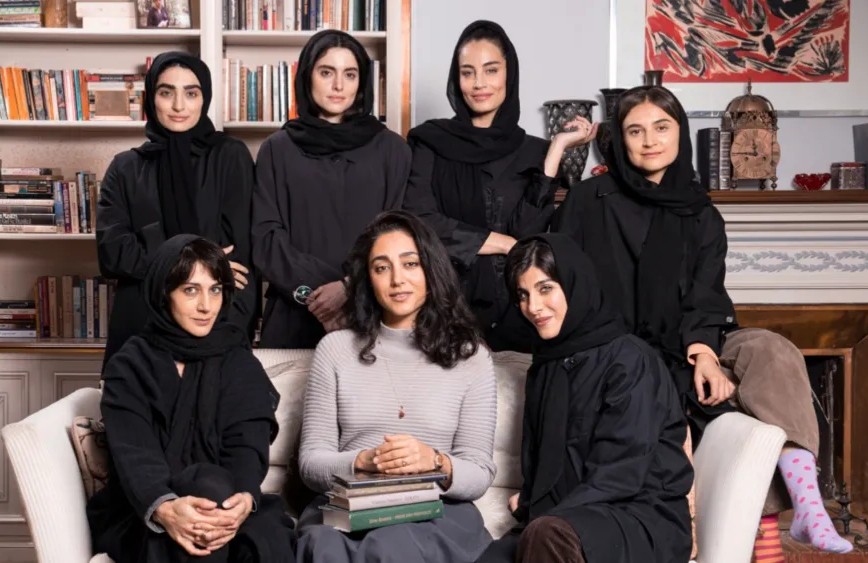
Its salvation is the incomparable Golshifteh Farahani, resplendent as Nafizi, the Iranian-American professor who returned to her homeland under the misassumption that the 1979 Islamic Revolution would bring peace and prosperity. In the role, Farahani oozes strength and defiance as her Nafizi boldly, some might say, foolishly, taunts the male-dominant theocracy by defying the rules and challenging its perceived righteousness.
It’s a deliberately understated performance that solidifies Nafizi as less a grandstander and more of a cautious intellectual cleverly outsmarting her male oppressors. Her weapon of choice is classic Western novels such as “The Great Gatsby,” “Pride and Prejudice,” “Inside Daisy Clover” and, of course, Nabokov’s controversial “Lolita.”
When Nafizi’s story begins, she’s free to teach the classics at Tehran University, where there’s initially no interference beyond a random male student citing a perceived immorality in “Huckleberry Finn” and “The Great Gatsby,” which is literally put on trial as part of a class project. But as the ayatollah begins whittling away his subject’s autonomy, among the first things confiscated are the novels Nafisi cherishes most. In response, she goes underground, hosting what essentially are weekly book-club soirees in her Tehran apartment, where a handful of her former female students gather at great risk to read and dissect taboo tomes.
Israeli director (how’s that for irony?) Eran Riklis does what he can to inject drama into these free-form debates, many of which hit uncomfortably close to home for the women. But there’s not enough depth emanating from a script by Marjorie David that clumsily seeks to streamline, aka dumb down, Nafisi’s memoir. This is particularly true while parsing “Lolita,” with one attendee sheepishly asking, “Are we, Lolita?” Dah! Old, sexually stunted men controlling women robbed of their agency? I would think that’s obvious.
An even larger issue for me is how woefully David fleshes out all but Farahani’s Nafisi, leaving the other actresses struggling to distinguish their generic characters. They mostly serve as martyrs in the face of being abused, assaulted, and, in one case, executed, for daring to speak up, both on the streets and in their homes. The violence inflicted upon them, in keeping with Sharia law, is stomach-turning. But it could have been more impactful if we related to others as readily as we do Nafisi.
I also found the film’s wide leaps in time disconcerting, largely because Riklis (“Lemon Tree”) does nothing to disguise the fact that everyone looks the same, whether it’s 1980, 1995, or 2003. The only notable exception is when the hijab becomes mandatory mere months after the Revolution. Either these characters have discovered the Fountain of Youth, or Riklis had neither the budget nor the inclination to depict the passage of time in his cast’s physical appearance.
A similar shortage of detail is evident in the underdeveloped relationship Nafisi strikes up with an older, wiser theater professor she repeatedly runs to whenever she’s in crisis, much to the understandable chagrin of her milquetoast-y husband, Bijan (Arash Marandi). Each time they meet, largely to exchange blacklisted novels, there’s an unmistakable sexual tension that Riklis frustratingly lets go unexplored.
Still, you cannot ignore the timeliness of “Reading Lolita,” both in the wake of the American/Israeli assault on Iran, but also because of what’s slowly creeping onto our shores via the religious right’s insidious attempts to turn the U.S. into a Christian theocracy. We’re already banning books. What’s next? Some semblance of “The Handmaid’s Tale”?
In that context, “Reading Lolita” sends chills almost as effectively as it elicits empathy for the many women of Iran who’ve been reduced to handmaidens, forced to choose between doing what they’re told or potentially losing their lives. Yet it glaringly lacks the urgency and engagement elicited by recent films such as “The Seed of the Sacred Fig” and “It Was Just an Accident.” Absent that, it’s little more than a collection of incomplete pages bound to a threadbare spine.
Movie review
Reading Lolita in Tehran
Rated: Not rated
Cast: Golshifteh Farahani, Zar Amir, Mina Kivani, Shahbaz Noshir and Arash Marandi
Director: Eran Riklis
Writer: Marjorie David
Runtime: 101 minutes
Where: In theaters July 10 (limited)
Grade: B-