Words mightier than sword in loquasious ‘Samurai’
The most intriguing aspect of “The Samurai and the Prisoner,” Kiyoshi Kurosawa’s first foray into the Japanese tradition of jidaigeki, is the J-horror maven’s celebration of non-violence through violence. I know, not at all what you’d expect from a somewhat factual 16th-century samurai tale whose DNA includes strands of Agatha Christie.
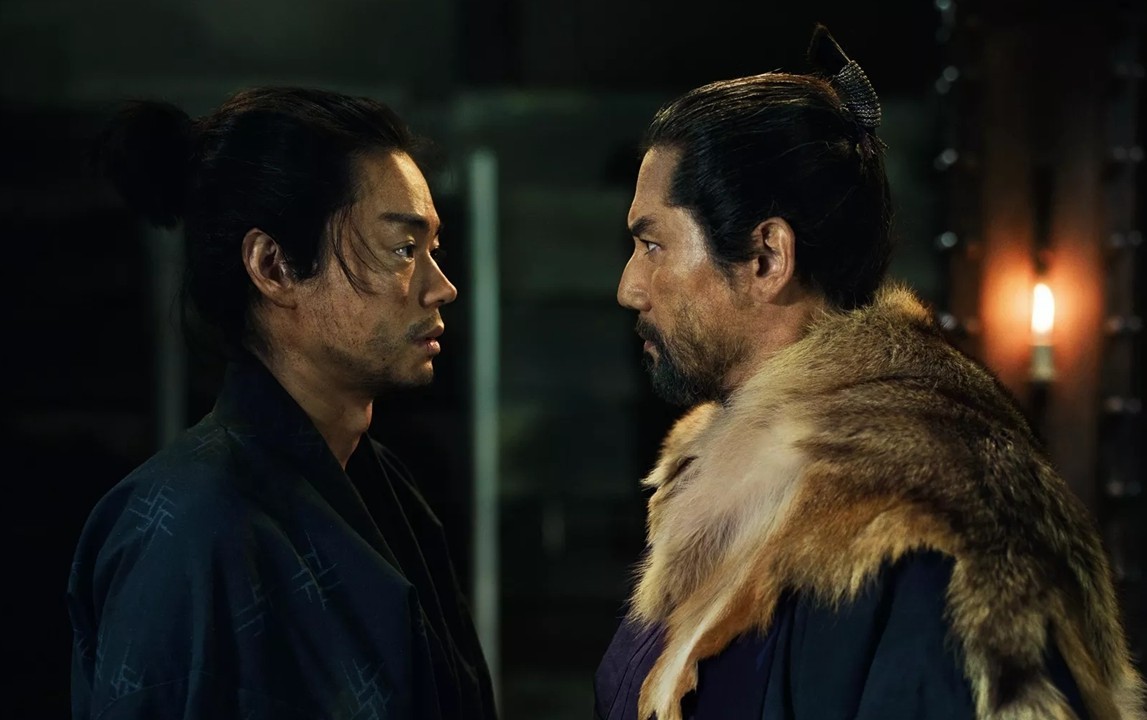
It’s basically four short murder mysteries clothes-pinned to a throughline centered around the last days of Nobunaga Oda’s siege on Arioka Castle and its traitorous lord, Murashige Araki (Masahiro Motoki). It’s a death by a thousand paper cuts, as the increasingly paranoid Murashige anxiously awaits an attack by Oda’s troops that never comes. It’s a bit of “Waiting for Godot” with a slice of Miss Marple in the person of Kanbie Kuroda (Masaki Suda), the titular “prisoner” whom Murashige regularly calls upon to help him solve a series of murders, one for each season, that occur in and around Arioka Castle.
There are times you’re tempted to rename it “Only Murders in the Castle,” except no one here is even half as amusing as Steve Martin or Martin Short. Mostly, they’re just meh, making for a plodding 147-minute slog, especially if you’re unfamiliar with Japan’s Warring States era. The four victims, including one prepubescent child, also fail to compel, rendering their deaths no more than a shoulder shrug. We barely get a glimpse as to who they are before they are felled by either arrow, bullet, or blade. And what do they mean in relation to the story Kurosawa seeks to tell?
At least the medieval set designs by Harada Tetsuo are highly evocative, as are the performances by the two leads, with Motoki leaving the most enduring impression as Murashige, the deeply conflicted lord who values life above all else, but must square that with the inevitable casualties of war. Although their scenes together are few, Motoki and Suda, who also starred in Kurosawa’s last picture, the superb thriller “Cloud,” summon potent chemistry.
It’s clear to us that Kanbei is toying with his captor, but as the murders mount and Murashige’s authority plummets, you detect an element of friendship and respect develop between them. A sort of 16th-century version of Holmes and Watson. You also find yourself weighing if Murashige is the real prisoner, locked in a cell of his own making.
As Murashige’s duplicitous wife, Chiyoho, Yuriko Yoshitaka also makes the most of her pivotal conversations with her beleaguered husband and his need to save face as Oda (Bando Shingo) slowly closes in, stirring flashbacks to the heinous acts the warlord forced him to commit while serving in his ranks. Yoshitaka also adds a welcome touch of femininity amid all the macho posturing on display.
Be warned, though, for a traditional samurai movie, there is a disappointing dearth of action, a shocking departure from the Kurosawa canon, which includes many a gory horror tale and a mafia-like showdown in last summer’s “Cloud.” Here, the weapon of choice is the reams of dialogue, some of it profound, some of it rote. Yet the message “The Samurai and the Prisoner” emits seems fit for today, as Murashige struggles to comprehend the declining respect for human life.
Nope, not your typical katana-wielding samurai flick, but I found the unpredictability of it rewarding. But even with a modicum of knowledge about Japanese history, mostly through Wikipedia, I remained more puzzled than entertained. I also felt a bit shallow about being so unfamiliar with this intensely violent period in Japan’s history. But if nothing else, it piqued a desire to learn more. And when a movie is powerful enough to do that, it’s nothing to swing a sword at. Well, maybe just a whack.
Movie review
The Samurai and the Prisoner
Rated: Not rated
Cast: Masahiro Motoki, Masaki Suda, Yuriko Yoshitaka, Munetaka Aoki
Director: Kiyoshi Kurosawa
Writer: Kiyoshi Kurosawa
Runtime: 147 minutes
Where: In theaters 7-31 (limited) before expanding 8-7
Grade: B-