Cold War talks are taken to the ‘Brink’
If you were alive in the autumn of 1986, when Bill Buckner whiffed on Mookie Wilson’s slow-roller to first, you’ll no doubt also remember the much-ballyhooed Reagan-Gorbachev summit that took place just three weeks earlier in chilly Reykjavik, Iceland. Little was settled during that Saturday-Sunday meeting between the Cold War giants, but it laid the groundwork for what Michael Russell Gunn’s chronicle of the weekend, “The Brink of War,” posits was the largest nuclear disarmament in recorded history.
The writer-director’s goal, I suspect, was to create something along the lines of Fernando Meirelles’ “The Two Popes,” with lots and lots of talking between icons about issues much bigger than themselves. The stakes? Nothing less than survival of the human race. But what emerges isn’t the least bit cinematic. It’s more like a two-man Broadway show with lots of emotive fist-pounding courtesy of a two-time Emmy winner and a two-time nominee.
You know, Aaron Sorkin-ish self-importance winning out over what might have been an endlessly fascinating character study in which bitter enemies are shocked to discover they have more in common than they realized. True, there’s some of that in evidence, but not enough to satisfy the casual moviegoer. No, what Gunn has created with his directorial debut is a film exclusively for geopolitical wonks like me. As such, I enjoyed it far more than I expected.
The credit for that begins with Jared Harris, dusting off his “Grenoble” Russian accent to not just play, but become, General Secretary Mikhail Gorbachev. I was certain Harris was going to give us the warm, grandfatherly Gorbachev who was about to become the toast of the free world. What I got was a Gorbachev who is frightened, suspicious and slyly cunning, more interested in pleasing the angry folks back home in Moscow than saving the globe from nuclear annihilation.
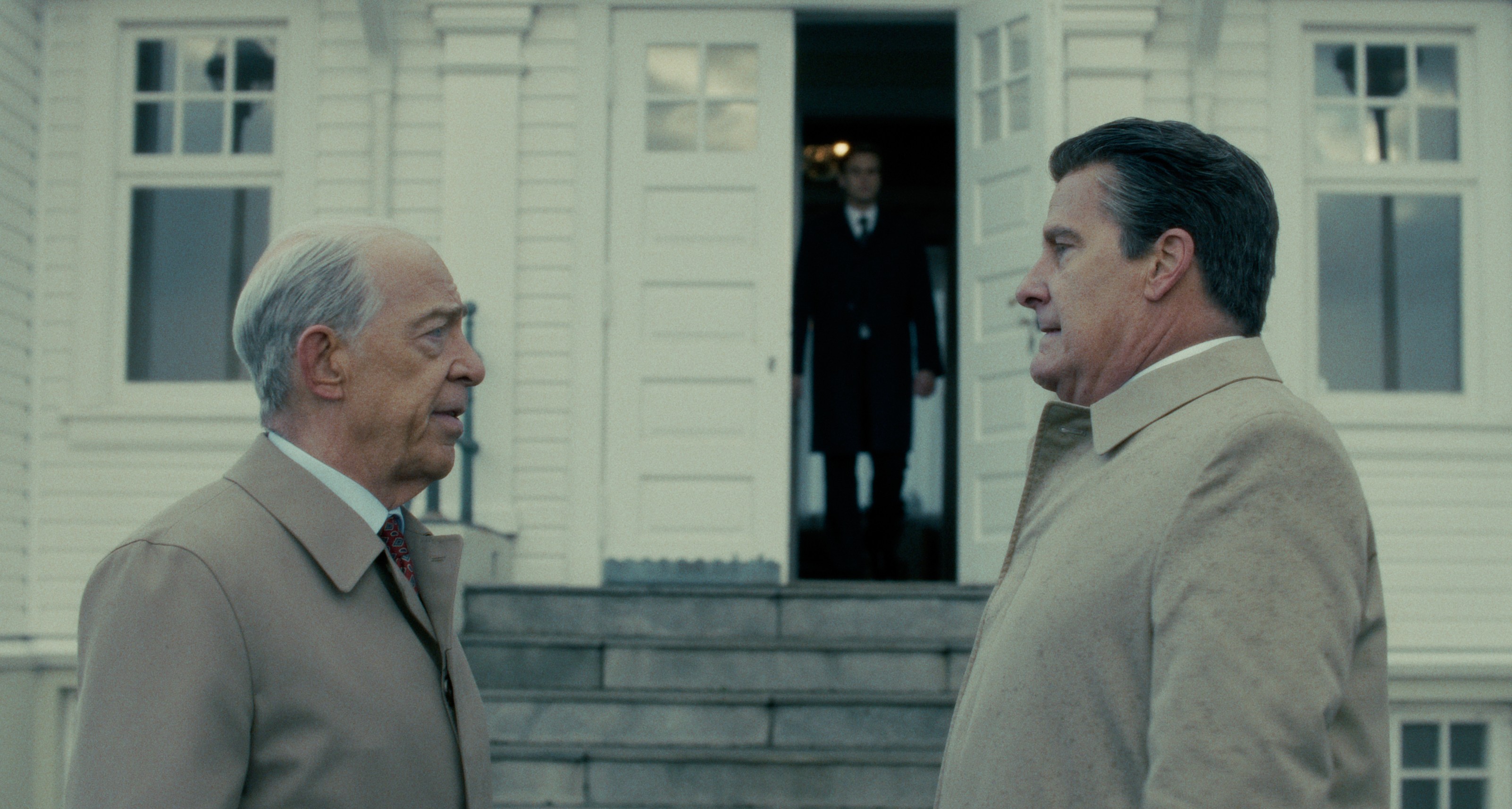
On the opposite side of the long, narrow table inside the quaint seaside cottage sits Mr. Tear Down That Wall himself, President Ronald Reagan. He’s portrayed by the always solid Jeff Daniels, bedecked in Godawful makeup and prosthetics that cause him to resemble a disfigured monster more than a former Hollywood actor turned politician. He gets the voice and cadence right, tossing in the occasional “Well,” Reagan’s famed favorite sentence opener. But physically, he’s all wrong.
I’d have rather seen him play the part sans garish makeup, because Daniels’ superior acting skills enable him to overcome the fact that he looks nothing like the 40th president of the United States by encapsulating his essence. But it’s not an even match between him and Harris, who flat-out dominates this stagy exercise.
The dialogue, thankfully, is consistently crisp and to the point, effectively boiling some 30 hours of talks down to their quintessence. The gist of the conversation is thus: nukes bad, total disarmament good. The rub isn’t so much when or how to go about it as it is the lines in the sand each man draws. For Reagan, it’s Gorbachev giving him the satisfaction of allowing the sister of Soviet defector Mstislav Rostropovich to fly to the U.S. to visit the maestro cellist on his birthday. For Gorbachev, it’s convincing Reagan to scrub plans for his grandiose Strategic Defense Initiative (aka Star Wars).
Both reveal acute stubborn streaks, with Gorbachev making the stronger case that yielding his position even the slightest bit on either contention would be political suicide. To Daniels’ credit, he perfectly captures Reagan’s gift for compassion in his pleas to allow the Russian siblings to reunite in the name of decency. For him, the sanctity of human rights is as important as clearing the earth of weapons of mass destruction.
Back and forth they go, like Borg and McEnroe, with the only pause in the action occurring when Gunn either splices in breathtaking shots of Icelandic landscapes or ham-handedly checks in on what’s going on with the respective first wives: Raisa Gorbachev (an excellent Branka Katic) doing her PR thing with press in tow in Reykjavik; and Nancy (Hope Davis) stewing over having been left behind in D.C. and becoming the target of Raisa’s passive aggressive taunts about her absence.
Of all the talk of weapons and their might, the most powerful explosive is the brilliant casting of J.K. Simmons as Secretary of State George Shultz. He’s the hero of the piece. Gunn knows and proves it by dedicating his film to the late statesman. Simmons, always a commanding presence, is never more so here in conveying Shultz’s knack for knowing exactly how to manipulate Reagan into seeing things his way, and then convincing POTUS it was his idea.
It makes you long for the days when presidential aides were respected and listened to when dispensing valuable advice. No sycophants here, unless you count Gorbachev’s posse of ass-kissers in both the diplomatic corps and the KGB, which humorously must share space with members of the CIA in the tiny remote building’s basement.
Yes, there are far too many instances in which Gunn uses expository dialogue as a crutch. And Daniels does indeed look freakish. But overall, “The Brink of War” is a compelling watch, a true relic and a far cry from modern diplomacy, with leaders like Putin and Trump utterly lacking the tact and empathy of those who came before them. But it does make the heart soar to be reminded that there was a time when political titans did not think only of themselves. They cared about our shared humanity, a truth that “The Brink of War” captures quite well.
Movie review
The Brink of War
Rated: PG for language, thematic elements and smoking
Cast: Jeff Daniels, Jared Harris, J.K Simmons, Hope Davis and Branka Katic
Director: Michael Russell Gunn
Writer: Michael Russell Gunn
Runtime: 117 minutes
Where: In theaters Aug. 14
Grade: B-