Mental illness fractures a family in ‘Blue Heron’
Effusive praise is being heaped upon “Blue Heron,” Sophy Romvari’s semi-autobiographical tale of growing up with a mentally challenged brother. But I’ll be damned if I know why. It’s precariously slight in almost every phase, from its detached tone and haphazard structure to its vanilla cast.
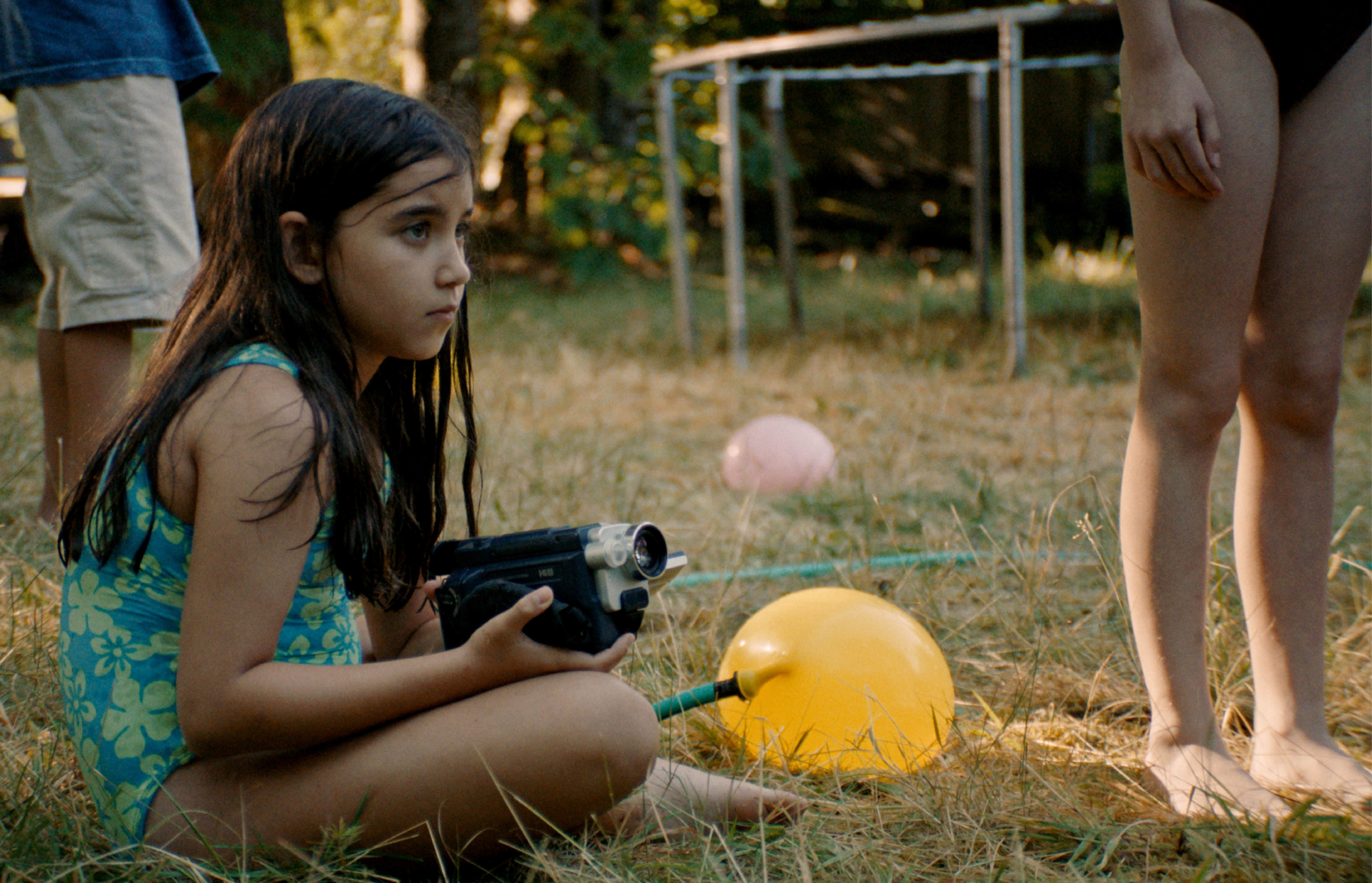
I tried, really tried, to like it. I even watched it twice, but it left me cold each time. Not that I didn’t feel for Romvari’s 8-year-old alter ego, Sasha (Eylul Guven), and her at-their-wits-end parents (Iringó Réti and Ádám Tompa), but there’s no depth to any of it. It’s basically a filmmaker working out her guilt on our dime without reward.
It’s hard not to compare it to Alfonso Cuaron’s Oscar-winning “Roma,” a vastly superior instance of an accomplished filmmaker revisiting the hazy memories of growing up in a fractured family. Just push the time period ahead 30 years to the 1990s and the location from south of the border to north of it. But unlike Cuaron’s familia, Romvari’s was fresh off the plane from Hungary, seeking a new start on Canada’s magnificent Vancouver Island.
It doesn’t take long to grasp what precipitated the move once we realize Sasha’s significantly older half-brother, Jeremy (Edik Beddoes), is a consistent source of public embarrassment for her parents and two biological brothers, Henry (Liam Serg) and Felix (Preston Drabble). Clearly, Jeremy is on the autism spectrum. It’s just that his mom, stepdad and shrink don’t know it yet, mainly because so little was known about neurodivergent children in the 1990s.
The ugly truth about that low level of understanding is that no one knew how best to assist a kid like Jeremy, seemingly your everyday, handsome-looking teen on the outside, but a neurological jumble inside. We learn that his parents have repeatedly attempted to get Jeremy the help he needs, but to no avail. And at a growing cost to Sasha, Henry and Felix, who, in keeping with being children, are fine with Jeremy garnering most, if not all, the attention. To them, Jeremy is actually kind of fun, that is, when he’s not borderline catatonic. But you sense that the three “normal” kids would benefit from more attention from Mom and Dad.
It’s a theme Romvari beats us over the head with, making us privy to multiple examples of Jeremy sucking all the air out of the room when he gets into one of his “moods.” These episodes can include: wandering off without telling his mom where he’s going; stealing a neighbor’s bicycle; shoplifting; and pulling dangerous stunts like climbing on the roof of their house and threatening to jump.
The dilemma for his mom and stepdad is whether it’s time to institutionalize him before he physically harms himself or one of his siblings. No doubt Romvari elicits empathy for the parents, but she doesn’t go far enough in revealing their inner struggles to maintain a sense of normalcy in their fracturing household. Like, for instance, does the stepdad take Jeremy’s antics more in stride than his wife? Is it because he’s not Jeremy’s actual father? Or is it because he’s all too happy to play good cop to his wife’s bad cop? We never know.
Ultimately, it’s all about the misplaced guilt the adult Sasha (a perfectly cast Amy Zimmer) seeks to shed by making a documentary about how she and her family failed Jeremy so tragically. A mea culpa, if you will. This journey comprises the final 40 of the film’s compact 90 minutes and proves far more compelling than what preceded it. Romvari even casts some of the people who worked on her half-brother’s case to comment in real time while they view home movies shot back in the day by her photophile father, who always seemed to have a camcorder at hand.
The capper is an imaginative stratagem in which Sasha assumes the role of Jeremy’s shrink, taking us back to the late ’90s, when her parents consulted a social worker on whether it was time to release Jeremy into foster care. It’s more than a bit eerie to see the adult Sasha interact with her younger self, even at one point whispering encouragement into the child’s ear. It inspired me to contemplate what I would say to my own younger self. And you wish for more cathartic moments like it that don’t keep you at a distance.
Romvari’s intent, obviously, is admirable. Lord knows we need more films about mental health issues. But what good are they if they fail to engage and help us better understand? Like I said, “Blue Heron” has its heart in the right place, but its ability to properly advocate, alas, disappears behind a cloud of indifference.
Movie review
Blue Heron
Rated: Not rated
Cast: Eylul Guven, Amy Zimmer, Edik Beddoes, Iringó Réti and Ádám Tompa
Director: Sophy Romvari
Writer: Sophy Romvari
Runtime: 90 minutes
Where: In theaters, expanding May 8
Grade: C